
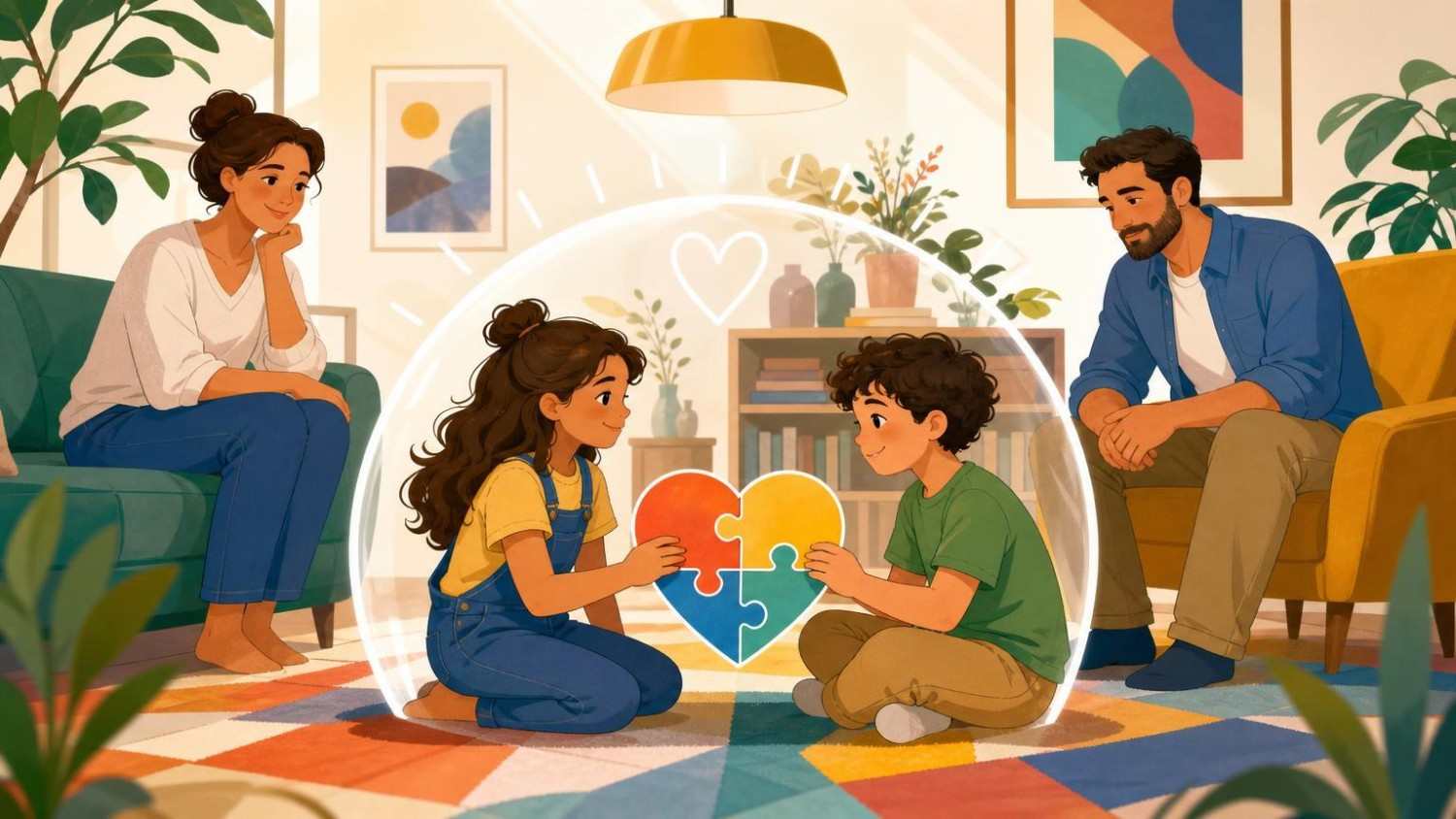
If you’ve ever found yourself standing between two screaming kids, arms outstretched like a human barricade, wondering how a single crayon could cause this much chaos, you’re not alone. The question of how to help siblings get along without constantly playing referee is one that haunts parents of multiple children on a near-daily basis. The truth is, most of us default to judge mode: we hear the screaming, we rush in, we assign blame, and we separate the combatants. It works for about four minutes. Then it starts again. The real shift happens not when you figure out the perfect ruling for every dispute, but when you stop being the judge altogether and start building a household where kids can actually work things out themselves. That’s not a fantasy. It’s a skill set, and it can be taught. Here’s what actually works.
Understanding the Roots of Sibling Rivalry
Before you can change the pattern, you need to understand what’s fueling it. Sibling conflict isn’t a sign that your kids hate each other or that you’ve failed as a parent. It’s a predictable outcome of putting two or more developing humans in close quarters, asking them to share resources (toys, space, your attention), and expecting them to manage emotions they barely understand.
Think of it like putting two coworkers in a tiny office with one desk, one computer, and one window, then telling them to “just get along.” Adults would struggle with that. Kids, who are still building the neural architecture for impulse control and empathy, find it even harder.
Developmental Stages and Social Skill Gaps
A five-year-old and an eight-year-old aren’t just different in size. They’re operating with fundamentally different cognitive toolkits. The five-year-old is still largely egocentric, not because she’s selfish, but because her prefrontal cortex won’t fully support perspective-taking for another couple of years. The eight-year-old has a better grasp of fairness but is developing a keen sense of injustice, which means he notices every perceived slight.
This mismatch creates friction that looks like personality conflict but is really a developmental gap. Your younger child grabs a toy because she wants it right now. Your older child explodes because “she always does this and nobody cares.” Neither response is wrong for their age. But the collision is inevitable. Recognizing this takes some of the emotional charge out of the moment for you as a parent, which is half the battle.

The Competition for Parental Attention
Here’s what’s actually happening beneath most sibling fights: a competition for a finite resource, which is you. Research consistently shows that parental attention is the single biggest driver of sibling rivalry, more than toys, more than space, more than screen time. Each child is running an unconscious calculation: “Am I getting my fair share of Mom or Dad?”
This is why fights often escalate when you’re on the phone, cooking dinner, or helping one child with homework. The unoccupied child isn’t acting out to be difficult. They’re signaling that they feel invisible. Understanding this doesn’t mean you need to distribute your attention with a stopwatch, but it does mean that some of the most effective interventions happen outside of conflict, not during it.
Shifting from Judge to Conflict Coach
The biggest mindset shift for most parents is moving from “I need to solve this” to “I need to teach them to solve this.” When you rush in and declare a winner and a loser, you’re training your kids to need you for every disagreement. You become the bottleneck. Instead, your goal is to be a coach: someone who teaches skills, sets boundaries, and then steps back to let the players practice.
This doesn’t mean you ignore conflict. It means you change your role in it.
Implementing the ‘Sportscasting’ Technique
Sportscasting is exactly what it sounds like. Instead of intervening with judgments (“Stop hitting your sister!” or “You need to share!”), you narrate what you see, like a play-by-play announcer. “I see two kids who both want the same tablet. Sam, you look frustrated. Lily, you’re upset because you had it first.”
This technique does three things simultaneously. It validates both children’s emotions, which immediately lowers the temperature. It names the problem without assigning blame. And it creates a pause, a tiny gap between impulse and action, where problem-solving can happen.
After sportscasting, you ask: “What could you two do about this?” The first few times, they’ll stare at you blankly or shout “NOTHING!” That’s fine. You can offer two or three options: “You could take turns, you could find something else to do, or you could set a timer.” Over weeks, they start generating their own solutions. That’s when the real magic happens.
Establishing Ground Rules for Fair Fighting
Conflict itself isn’t the enemy. Destructive conflict is. One of the most practical things you can do is sit down with your kids during a calm moment (not mid-battle) and establish ground rules for disagreements. Keep the list short: three to four rules maximum.
A solid set might look like this:
- No hitting, kicking, or throwing things
- No name-calling or insults about someone’s body or identity
- Either person can call a break if they’re too upset to talk
- If you can’t solve it together after trying, you can ask a parent for help
Write these down. Post them in the fridge. Reference them consistently. The key word is consistently. These rules only work if they’re enforced every time, not just when you’re in the mood. Kids internalize boundaries through repetition, not lectures.
Proactive Strategies to Build Sibling Bonds
Reducing conflict is only half the equation. The other half is actively building positive connections between your kids. Siblings who have shared positive experiences and feel individually secure are less likely to fight in the first place. Think of this as preventative investment: the time you spend here saves you exponentially more time refereeing later.
Scheduling Special One-on-One Time
This is the single most underrated strategy for reducing sibling conflict, and it’s backed by decades of family psychology research. When each child gets predictable, dedicated one-on-one time with a parent, their anxiety about “getting enough” drops significantly. Even 15 to 20 minutes per child, three to four times a week, can shift the dynamic.
The key is predictability. Don’t just squeeze it in when you happen to have a free moment. Put it on the calendar. Let the child choose the activity. During that time, your phone is away, the other kids are with another caregiver or occupied, and this child has your full, undivided presence. A six-year-old who knows she has “Tuesday evening drawing time with Dad” is measurably less likely to pick fights with her brother on Monday, because she’s not operating from a deficit.
Creating Shared Goals and Team Challenges
Kids who see each other as teammates rather than competitors fight less. You can engineer this. Give your children a shared project: building a blanket fort, planning a family movie night menu, creating a scavenger hunt for the weekend. The task should require cooperation and have a concrete outcome they both care about.
One family I know started a weekly “sibling challenge” where the kids had to work together to earn a shared reward, like choosing the family dinner or picking a weekend outing. The tasks were simple: keep the playroom clean for three days, teach each other a new skill, or create a comic book together. Within a month, the parents noticed their kids defaulting to collaboration during unstructured time, not just during the challenges. Shared positive experiences build a relational bank account that makes small conflicts easier to absorb.
Creating a Household Culture of Respect
Individual strategies matter, but they work best inside a household culture that reinforces respect as a baseline expectation. Culture sounds like a big word for a family of four, but it’s really just “the way we do things here.” And kids absorb it faster than you’d think.
Avoiding Comparisons and Labels
“Why can’t you be more like your sister?” is a sentence that has launched a thousand sibling feuds. Even positive comparisons (“You’re the creative one, and he’s the athletic one”) box children into identities that breed resentment. The “creative one” feels pressure to never fail artistically. The “athletic one” stops trying to draw because that’s “not his thing.” And both resent the other for occupying territory they can’t access.
One common mistake is thinking that praising one child in front of another is harmless. It’s not. “Look how nicely your brother cleaned his room” doesn’t motivate the other child to clean. It motivates them to resent their brother. Instead of comparing, describe what you see in each child individually: “You worked really hard on that drawing” or “I noticed you kept trying even when the math was tough.” Keep each child’s wins separate from the other’s.
Modeling Healthy Conflict Resolution
Your kids are watching you disagree with your partner, your own siblings, your friends, and the customer service representative on the phone. They’re absorbing every bit of it. If you resolve disagreements by yelling, shutting down, or giving the silent treatment, that’s the template they’ll use with each other.
But here’s what’s actually happening when you model healthy conflict: you’re giving your kids a living tutorial. Let them see you say, “I’m frustrated right now, so I need a few minutes before we talk about this.” Let them hear you say to your partner, “I see it differently, but I want to understand your side.” You don’t have to be perfect. In fact, repairing after you mess up is one of the most powerful things you can model. “I raised my voice earlier, and that wasn’t okay. I’m sorry” teaches your kids that conflict doesn’t have to be catastrophic and that relationships can survive disagreement.
When to Step In and When to Step Back
This is the question that keeps parents frozen in doorways, listening to the rising volume from the other room and wondering: do I go in? The honest answer is that it depends, but there are clear guidelines that can replace your gut-level panic with a more reliable decision-making framework.
Identifying Red Flags and Safety Concerns
Step in immediately when there’s a physical safety risk: hitting, biting, throwing objects, or cornering a younger child. Also step in when you hear verbal abuse that crosses into cruelty, such as targeting a child’s deepest insecurities, using slurs, or making threats. These aren’t teachable moments. They’re moments that require an adult to stop the harm first and teach second.
Watch for patterns, too. If one child is consistently dominating the other, if one child seems afraid rather than annoyed, or if the power imbalance is stark (a much older child bullying a much younger one), that’s not normal sibling friction. It’s a dynamic that needs direct intervention and possibly professional support. The rule of thumb: if both kids are roughly equal in power and neither is in danger, you can coach from the sidelines. If one child is being victimized, you step in.
The Power of the ‘Cool Down’ Period
Most sibling fights escalate not because the original issue is that serious, but because both kids are flooded with emotion and can’t think straight. The amygdala has hijacked the prefrontal cortex, and no amount of rational problem-solving is going to land until the nervous system calms down.
Instead of forcing an immediate resolution (“Say sorry to your brother right now”), try separating the kids for a cool-down period. This isn’t a punishment. Frame it as: “You’re both too upset to solve this right now. Take ten minutes to calm down, and then we’ll figure it out together.” Give each child a physical space and a calming activity: drawing, squeezing a stress ball, listening to music. After ten to fifteen minutes, most kids can re-engage with the problem at a fraction of the original intensity.
Empowering Children with Problem-Solving Tools
The ultimate goal isn’t a conflict-free household. That’s neither realistic nor even desirable, because conflict is where kids learn negotiation, empathy, and resilience. The goal is to give your children a toolkit they can reach for before they reach for each other.
Teach them a simple three-step process they can use independently:
- State your feelings: “I feel mad because you took my book without asking.”
- State what you want: “I want you to ask me first next time.”
- Propose a solution: “Can we make a rule about borrowing each other’s stuff?”
Practice this during calm moments, not during actual fights. Role-play silly scenarios at dinner: “Pretend I took your dessert. What would you say?” Kids learn through repetition and play, not through lectures delivered while they’re crying.
You can also track progress informally. Notice when your kids resolve something without your help and name it: “I heard you two work that out on your own. How did that feel?” Over a few months, you might notice that the daily fight count drops from five to two, or that the intensity shifts from screaming to grumbling. That’s real progress. It won’t be linear, and there will be weeks where it feels like nothing has changed. But the skills are building underneath, like compound interest on an investment you can’t see yet.
Helping siblings build a real relationship, not just a ceasefire, is one of the most meaningful things you can do as a parent. You’re not just reducing the noise in your house. You’re teaching two people how to love someone they didn’t choose, how to fight without destroying, and how to repair what gets broken. Those are skills they’ll carry into every friendship, partnership, and workplace for the rest of their lives. Stop refereeing. Start coaching. And give it time.