
Every spring, a familiar worry shows up among parents of four-year-olds: Does my child know enough letters? Flashcards come out, alphabet apps get downloaded, and kindergarten readiness starts to feel like a test you can cram for.
Ask kindergarten teachers what they actually wish children arrived with, though, and letters rarely top the list. They talk about kids who can wait their turn, follow a two-step direction, zip their own jacket, and recover when a block tower falls. Those are the preschool skills that matter more than knowing the ABCs, and most of them are built through ordinary daily life, not drills.
The Academic Myth: Why Rote Memorization Isn’t Readiness
A child who can recite the alphabet has shown one thing: a good memory for a song. That’s a nice ability, but it’s a narrow one. Reciting “A-B-C” in sequence doesn’t mean the child connects letters to sounds, understands that print carries meaning, or can sit through a 15-minute story without melting down.
One common mistake is treating early academics as a head start that compounds over time. Research on early academic programs has repeatedly found that letter and number gains tend to fade by the early grades, as other children catch up quickly once formal instruction begins. The advantages that persist look different: attention, self-control, and the ability to get along with others.
Think of it like building a house. Letters and numbers are the furniture. You can buy it early, but if the foundation and framing aren’t in place, there’s nowhere useful to put it. Kindergarten teachers can teach the alphabet to almost any child in a few months. What they struggle to teach in that same window is how to listen, cooperate, and keep trying when something feels hard.
None of this means letters are bad. It means they’re the easy part, and the hard parts deserve more of your attention.
Executive Function: The Brain’s Air Traffic Control System
The Center on the Developing Child at Harvard University describes executive function as an air traffic control system for the brain. Just as controllers manage dozens of planes taking off and landing without collisions, executive function lets a child juggle incoming information, hold plans in mind, and switch between tasks.
It has three core parts: working memory, inhibitory control, and cognitive flexibility. None of these skills is fully formed at birth, and the preschool years are one of the most active periods for their development. The prefrontal cortex, which handles much of this work, keeps maturing into the mid-twenties, but the early scaffolding gets built between roughly ages three and five.
This isn’t random. Children who show stronger executive function in preschool tend to do better later in reading and math, because those subjects demand exactly these abilities: holding a sound in mind while blending it with the next one, or remembering the carry digit while finishing an additional problem.
Developing Working Memory and Focus
Working memory is the mental sticky note. When you tell a four-year-old, “Put your shoes by the door and then wash your hands,” they have to hold both steps while doing the first. Many preschoolers forget the second instruction halfway down the hall, and that’s normal.
You can stretch this capacity gently. Start with two-step directions, then try three. Play games like “I’m going on a picnic,” where each person repeats the growing list of items. Simon Says and freeze dance build focus, because children have to listen carefully and act only on the right signal.
Building Cognitive Flexibility for Problem Solving
Cognitive flexibility is the ability to shift approaches when the first one fails. Picture a child trying to fit a large puzzle piece into the wrong spot over and over. The flexible thinker eventually rotates it or tries a different spot; the stuck one gets frustrated and quits.
Sorting games build this well. Have your child sort buttons by color, then mix them up and sort by size. Ask “What else could we use as a boat?” during bath time. Each switch trains the brain to let go of one rule and pick up another.
Social-Emotional Intelligence as a Predictor of Success
A widely cited study led by researchers at Pennsylvania State University and Duke University followed children for nearly two decades. Kindergartners whom teachers rated higher on social skills such as sharing, cooperating, and helping were more likely to graduate from college and hold full-time jobs as young adults. The lower-rated children were more likely to face problems with substance use and the justice system.
The mechanism makes sense when you think about it. School is a social environment. A child who can read a teacher’s face, ask for help, and work alongside classmates gets more out of every lesson. A child who feels anxious or excluded spends energy managing those feelings instead of learning.
The Power of Impulse Control and Self-Regulation
Walter Mischel’s famous marshmallow experiments at Stanford University asked preschoolers to wait for a second treat instead of eating one immediately. Later replications have complicated the original story, showing that family resources shape results too. But the core lesson holds: the strategies children use to manage urges matter.
Psychologist Laura Berk of Illinois State University has studied how preschoolers talk to themselves out loud (“I have to wait, I have to wait”). This private speech isn’t a quirk. It’s a self-regulation tool. Rather than shushing it, let your child narrate. It’s how they’re learning to steer their own behavior.
Navigating Peer Conflict and Collaborative Play
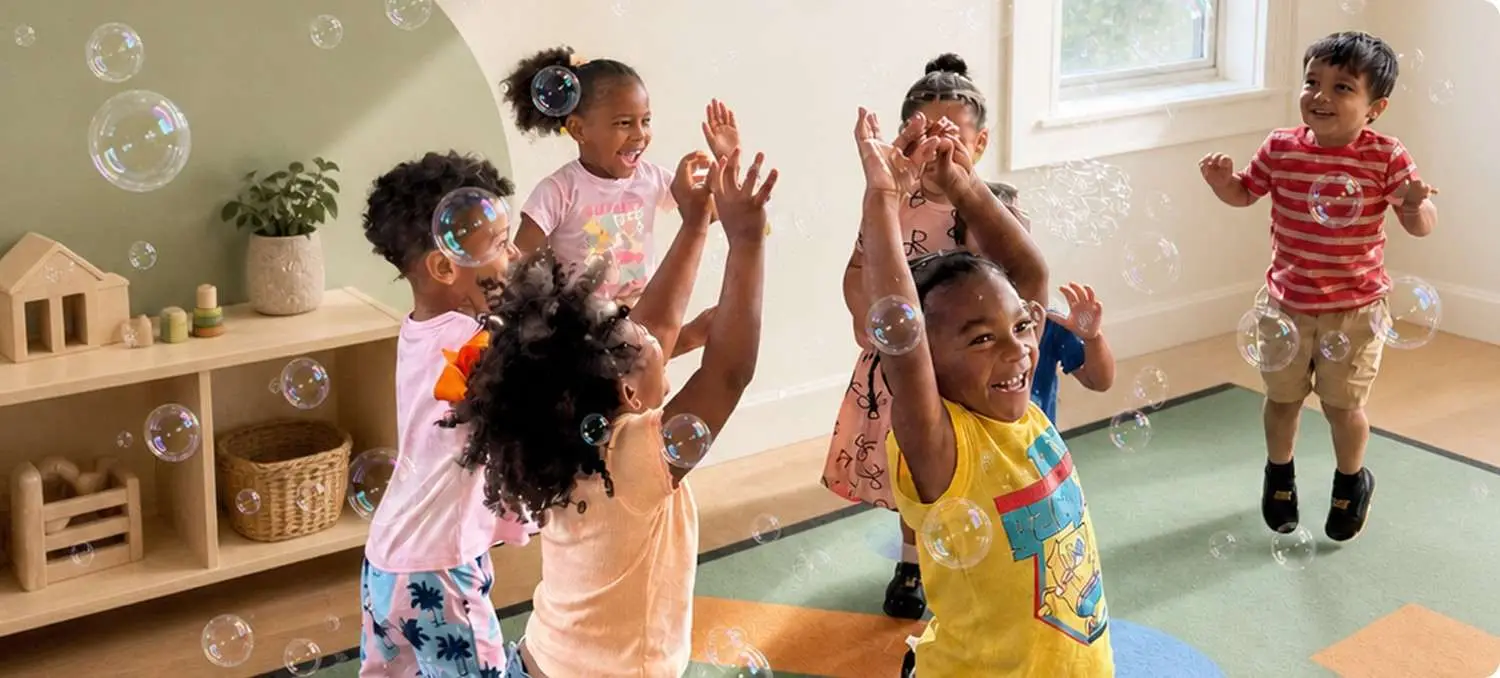
Two kids, one red truck. This scene plays out in every preschool daily, and it’s a lesson, not a failure. Children learning to negotiate (“You can have it after I go around twice”) are practicing perspective-taking, compromise, and language under pressure.
Resist the urge to solve it instantly. Try coaching instead: name the feelings, ask each child what they want, and let them propose a fix. Pretend play, like running a pretend restaurant, also builds collaboration because kids have to agree on roles and rules.
Oral Language and the Foundation of Literacy
Here’s what’s actually happening when a child learns to read: they’re mapping written symbols onto a spoken language they already know. If the spoken vocabulary is thin, the written words have nothing to attach to. That’s why oral language, not letter recognition, is the stronger foundation for later literacy.
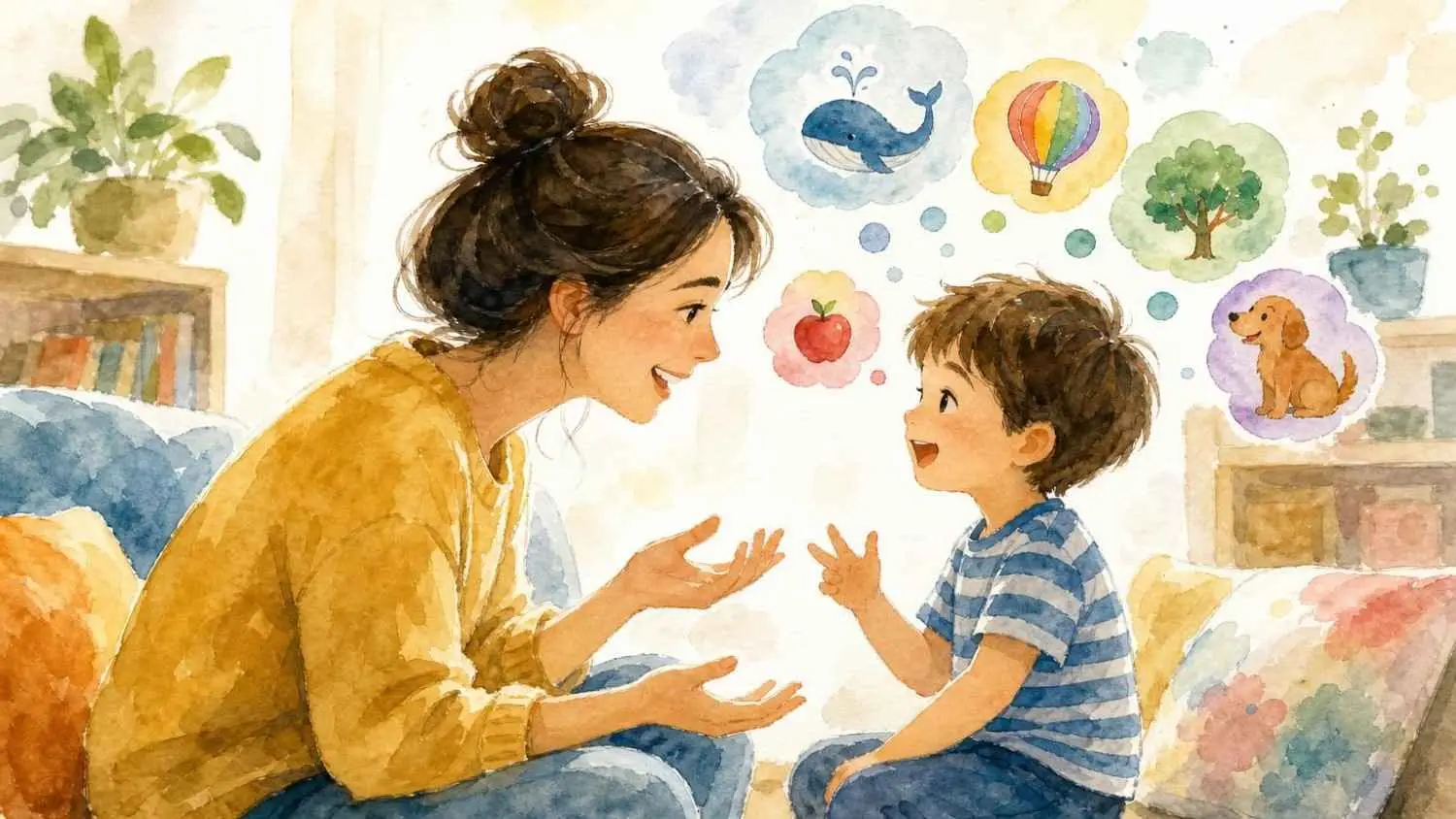
Research from MIT’s McGovern Institute found that back-and-forth conversation between adults and young children was linked to stronger activity in language areas of the brain, more so than the sheer number of words a child heard. In other words, talking with your child beats talking with them.
Practical ways to build this:
- Ask open-ended questions: “What was the funniest part of your day?” instead of “Did you have fun?”
- Expand their sentences: If they say “Dog run,” respond with “Yes, the brown dog is running fast across the park.”
- Read with pauses: Stop mid-story and ask what might happen next.
- Use rich words: Say “enormous” or “exhausted” without simplifying. Kids learn from context.
A child who can retell a story, describe what they want, and follow a conversation is far more prepared to read than one who can only name letters on a card.
Curiosity and the Growth Mindset Advantage
Every parent knows the “why” phase. Why is the sky blue? Why do worms come out when it rains? It can be exhausting, but those questions are the engine of learning. A child who wants to find things out will keep learning long after any specific fact has been forgotten.
Stanford psychologist Carol Dweck’s work on mindset shows that how adults praise children shapes how they approach challenges. Kids praised for being “smart” tend to avoid hard tasks that might prove otherwise. Kids praised for effort and strategy (“You tried three different ways to build that bridge”) are more willing to tackle difficult problems.
Feed curiosity by answering questions: “Hmm, why do you think worms come up?” Then look it up together. You’re modeling that not knowing is the start of learning, not something to hide.
Fostering Resilience Through Trial and Error
A child struggling to pour juice without spilling is learning more than pouring. They’re learning that mistakes can be fixed. That’s a mistake many loving parents make: stepping in too fast to prevent frustration.
Let small failures happen. Hand over the paper towel instead of grabbing the cup. When a drawing “looks wrong,” ask what they’d change next time. Children who experience recoverable setbacks at four handle bigger ones better at eight.
Fine and Gross Motor Skills for Classroom Independence
Motor skills sound like a gym class topic, but they have a direct effect on how a child functions in a classroom. A kindergartner who can’t open a lunch container, use scissors, or manage a bathroom trip alone depends on adults for help, and that waiting eats into learning time and confidence.
Fine motor skills involve the small muscles of the hands and fingers. They support holding a pencil, buttoning, and turning pages. Gross motor skills use the large muscles for running, climbing, and balancing, and they also support the core strength needed to sit upright at a table.
Simple ways to build both:
- Fine motor: Play dough, tearing paper, picking up cereal with tongs, threading pasta onto string, peeling stickers
- Gross motor: Climbing playground equipment, hopping on one foot, carrying groceries, riding a balance bike
- Self-care practice: Let them zip jackets, pour water from a small pitcher, and open their own snack packages
A slice-of-life example: a child who insists on putting on their own shoes, even mismatched or on the wrong feet, is doing motor practice and building independence at once. Let the socks be mismatched. The win is bigger than the outfit.
Practical Ways to Prioritize Soft Skills at Home
You don’t need a curriculum. In fact, the more complicated your plan, the less likely you’ll stick with it. Consistency with a few basics beats a dozen activities you try once. Pick three or four core habits and repeat them daily:
- Daily conversation time: Ten minutes at dinner or bedtime of real back-and-forth talk.
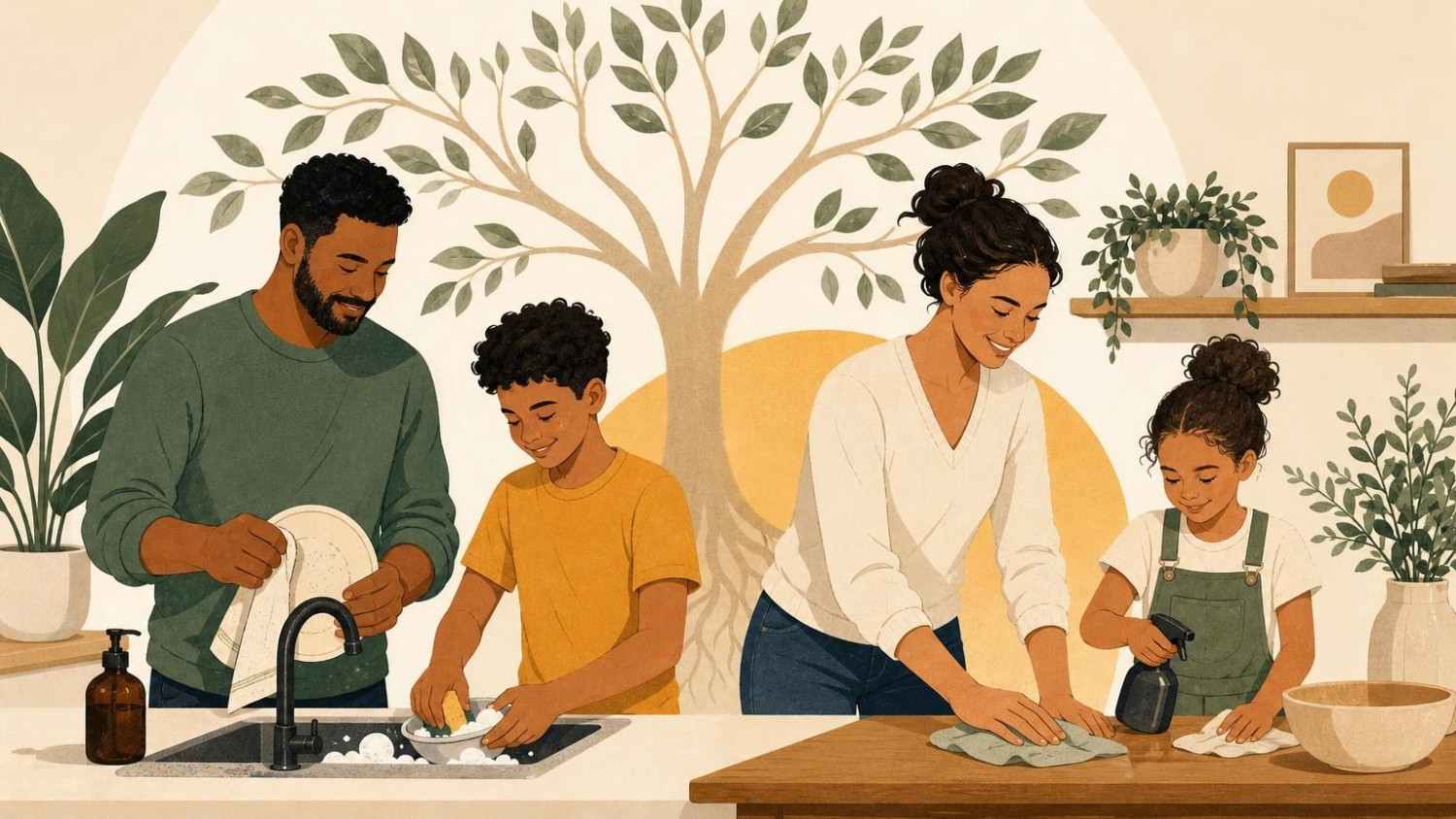
- One small responsibility: Feeding a pet, setting out napkins, or watering a plant.
- Unstructured play: At least an hour of open-ended play with simple materials like blocks or art supplies.
- A waiting game: Board games like Candy Land teach turn-taking and losing gracefully.
Think of these as preventative investments, a bit like compound interest. Small daily deposits in attention and self-control grow quietly, and they cost far less than trying to fix struggles reactively in second grade.
Tracking helps you notice progress that’s otherwise easy to miss. Every few weeks, jot down a few simple markers:
- Direction length: How many steps can your child follow without reminders? (Two, three, four?)
- Wait time: How long can they wait for a turn or a snack before getting upset?
- Recovery time: After a frustration, how many minutes until they’re calm?
- Independent tasks: How many self-care tasks can they do alone, such as dressing or washing hands?
Write these in a notebook or phone note. Over three to six months, you’ll likely see real movement, and it will tell you more than any letter quiz.
Shifting the Focus Toward Long-Term Developmental Health
The alphabet will come. Nearly every child learns it, usually with little fuss, once they’re developmentally ready and someone shows them. What doesn’t arrive automatically is the ability to focus, manage big feelings, talk through problems, and keep trying when something is hard. Those are the abilities that hold up across years, not weeks.
So if you’re weighing how to spend your limited time with a preschooler, the answer is reassuring. Real readiness grows from conversations at dinner, turns at a board game, spilled juice that gets cleaned up, and a stubborn insistence on zipping one’s own coat. These ordinary moments build the skills that outlast flashcards.
Start this week with one habit: a ten-minute conversation each day where you ask a real question and actually wait for the answer. It’s small, it’s free, and it may do more for your child’s future than every alphabet app combined.